

Why Graphene-Coated Solar Panel Manufacturing Did Not Meet Market Demand
10/01/2026
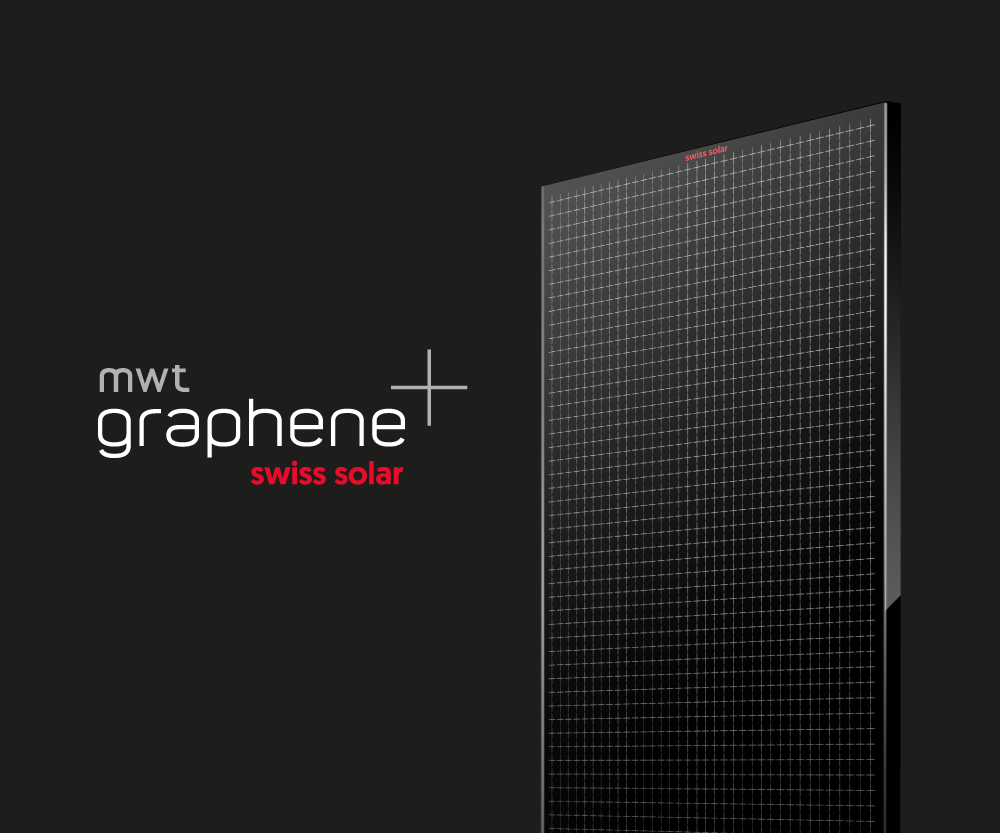
For several years, graphene was considered one of the most promising materials for enhancing solar panel performance. Many manufacturers, including Swiss Solar, implemented graphene-coated modules in pilot and commercial products, achieving high levels of quality, reliability, and visual appeal.
However, as the photovoltaic market matured, it became clear that the primary purchasing driver for most customers is the balance between price and performance. This factor ultimately determined the limited long-term demand for graphene-coated solar panels.
High Manufacturing Cost
Producing solar panels with graphene coating requires:
- additional production steps
- specialized coating equipment
- stricter process control
- higher-cost materials
These factors significantly increase module manufacturing cost.
As a result, graphene-coated panels are noticeably more expensive than conventional high-efficiency modules.
Market Behavior: Preference for Cost-Effective Technologies
Most commercial and industrial customers focus on:
- cost per watt (€/Wp)
- project payback period
- predictable energy yield
Even when graphene-coated modules demonstrate excellent quality, the market is generally not willing to pay a premium unless performance gains are directly proportional to the price increase.
Buyers increasingly prefer more affordable technologies that deliver high efficiency without a substantial cost penalty.
Swiss Solar’s Experience with Graphene-Coated Panels
Swiss Solar successfully manufactured graphene-coated solar panels that offered:
- high build quality
- stable electrical performance
- good mechanical strength
- premium aesthetics
From a technical perspective, the product was mature and reliable.
However, commercial analysis showed that under current market conditions, continuing large-scale production is not economically justified.
Strategic Decision by Swiss Solar
Swiss Solar chose to focus on technologies that:
- deliver high efficiency
- remain accessible for mass-market adoption
- can be easily scaled
- provide predictable project economics
This led to a strategic shift away from expensive surface coatings toward advanced cell architectures and optimized module design.
The Next-Generation Solution — PHANTOM Series
As a result of three years of engineering development, Swiss Solar introduced the PHANTOM Series, combining the company’s best technological achievements from the past decade.
PHANTOM is based on:
- TOPCon Advanced solar cells
- optimized lamination structure
- improved glass materials
- reinforced frame design
This combination enables high efficiency and long service life without significant increases in manufacturing cost.
Economics Over Exotic Materials
The experience with graphene-coated panels confirmed a fundamental principle of the solar industry:
Technologies that offer the best balance of cost, efficiency, and reliability ultimately succeed.
Conclusion
Graphene-coated solar panels demonstrated excellent quality but proved too expensive for broad market adoption.
Swiss Solar’s strategic transition toward cost-effective high-efficiency technologies has resulted in the PHANTOM Series — a practical next-generation solution for commercial and industrial photovoltaic projects.